A Bold Prediction for 2025 | Proof
As digital-first consumer preferences clash with rising AI-driven misinformation in 2025, Proof introduces a portable digital identity solution for banks, aiming to establish trusted, verifiable identities online much like how Visa revolutionized payments in 1958.
New
Proof launches portable digital identity for banks
Introducing portable identity

As we enter 2025, society is grappling with two opposing forces. On the one hand, we are increasingly digital first. We have a generation of consumers who shy away from doing things on paper and reject having to sign things with a pen. Consumers no longer want to meet you at your office, they much prefer doing things online, on their own time, and fast. Put simply, society no longer tolerates analog, they want everything to be digital. At the same time, an AI-powered arms race is threatening everything we trust. Our own eyes can no longer be trusted to tell what’s real and what’s fake. The things we rely on, from the news to banks and even our governments, don’t know what information they can trust, what documents are real and what is forged, or if the person they’re talking to is even a real person.
As Marc Andreessen recently said, we have to “switch our sense of what's real from basically just trying to eyeball it…to only taking seriously the things that we know are real.”
The good news is that we’ve solved this problem before, and we have the technology to do it again. In 1958, Bank of America launched BankAmericard (later becoming what we know as Visa). While today we mistake Visa’s contribution to society as the inventor of the credit card, in reality, their invention was much bigger: they reestablished trust in payments with the creation of the electronic network for value exchange.
Just as payment networks revolutionized how we handle money, I predict we're about to see a similar transformation in how we handle identity online.
The Numbers Paint a Stark Reality
According to recent Federal Trade Commission data, consumer financial losses from fraud reached an estimated $158.3 billion in 2023. Even more concerning, 80% of financial services executives expect AI-generated fraud to undermine existing identity-proofing methods in the next 12 months.
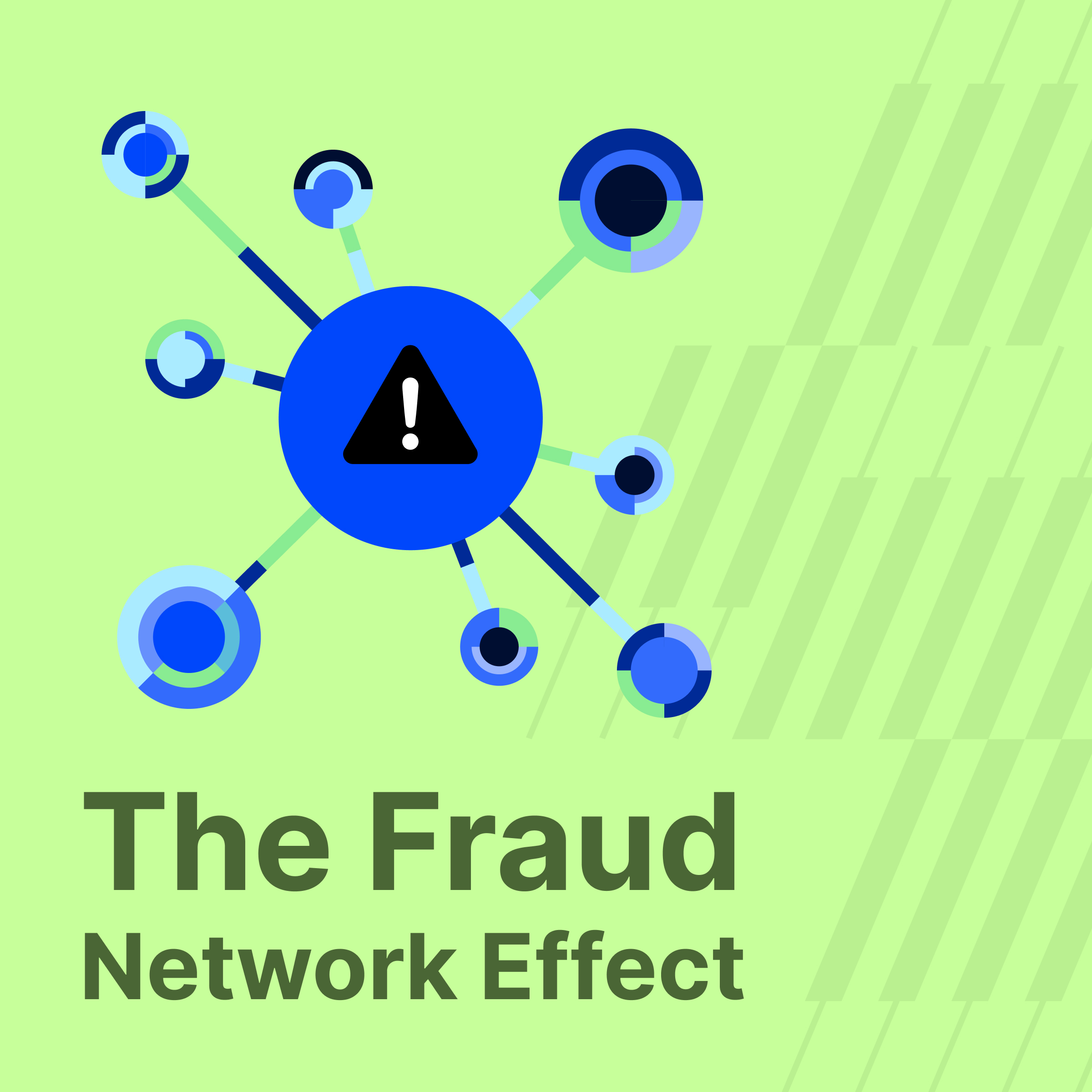
Today's fraudsters aren't working alone - they're leveraging AI and operating in sophisticated networks. When one criminal discovers a weakness in a company's identity verification system, that knowledge is instantly shared and weaponized across criminal networks. Yet bizarrely, most businesses are still fighting this networked threat alone, with individual KYC and identity-proofing policies that create silos for fraudsters to expertly exploit. Criminals are working together while businesses are left fending for themselves.
The parallel to early credit card fraud is striking. Before the major payment networks, merchants fought fraud individually and with little success. The game-changer came when networks enabled issuers and merchants to share fraud data. When a card was compromised at one store, the entire network could respond in real time and stop a transaction in flight. Momentum really began to compound as networks allowed merchants to trust consumers without having a pre-established relationship. The same solution should exist for all authorizations and transaction types, not just payments. But to do so, we need to think bigger. Certainly beyond siloed IDV solutions and even bigger beyond data consortiums and databases. What we need is the coordination and sophistication of an identity network.
The Identity Verification Explosion
As AI makes it trivially easy to fake phone calls, emails, and even video chats, businesses have had no choice but to throw up identity verification in front of everything we do online. A recent survey showed that 98% of eCommerce companies report an increase in AI-enabled transaction fraud. But the solution we’ve turned to, verifying your identity from scratch every time we do something online, is like carrying a different credit card for every store we visit. This paradigm is not only ineffective, it doesn’t align with what consumers want. Consumers today are increasingly concerned about identity theft and privacy, yet they’re increasingly asked to provide ID documents and sensitive information to every business on the internet. After relentless data breaches, it's an open secret that we’ve reached a tipping point, and our current approach is no longer sustainable. Without considerable redirection, we face catastrophic harm to not only the institutions we rely on but to national security.
The right solution mirrors what payment networks achieved: allowing one trusted credential to work everywhere. Initially, in payments, a single credential was accepted across merchants on the same street, then merchants across states, and eventually across countries, and now globally.
Liability and Consumer Protection
Perhaps the most crucial lesson from payment networks concerns liability. Credit cards gained widespread adoption because networks like Visa established clear rules about who bears the cost when things go wrong. Today's identity market lacks this clarity - consumers shoulder the burden of proving identity theft while businesses struggle to determine their liability for account takeovers and how to handle reimbursements.
75% of financial services respondents say they are highly concerned about fraud risks in electronic documents and signatures, which are widely used for authorizations and increasingly susceptible to AI-enabled forgery. Without clear rules about liability and consumer protection, our entire concept of identity is set to collapse. Today, consumers have no protection when a business mistakenly accepts forged records. They only discover it later, after the damage is done, leaving them to recover their identity and fight a dispute in court.
Similar to payments, identity networks that guarantee the efficacy of their solutions and offer verifiable proof as to who authorized what will not only address industry concerns but also provide practical solutions for everyday consumers.
Looking Ahead and Learning from Payment Networks
The parallels between the evolution of payments and the journey the identity industry is on are clear. In the same way that payment networks solved the problem of establishing trust between merchants and consumers with no direct relationship, identity networks will emerge to solve the same problems that exist on the internet.
Over the next few weeks, we’ll delve into these themes in a new series we’re launching that explores the historical trends behind our predictions and examines how modern payment networks provide a playbook for how Identity Authorization Networks will become the identity layer for the Internet.





























.jpg)


















































.jpg)