How to Keep Real Estate Transactions Secure
The article highlights the rising threat of real estate fraud, which caused $275 million in losses in 2025 due to increased digital closings expanding vulnerabilities, and emphasizes the need for integrated security measures throughout the transaction process to protect sensitive financial and personal data from sophisticated schemes like wire fraud, identity theft, and social engineering targeting lenders, title companies, and closing teams.
New
Proof launches portable digital identity for banks
Introducing portable identity

Updated August 20, 2026
Real estate fraud losses hit $275 million in 2025, up 58% in a single year. Digital closings have expanded the attack surface, and every new touchpoint is a potential entry point for bad actors. Federal agencies like FinCEN dedicate entire programs to tracking suspicious activity across the mortgage and real estate industry because the threat is that serious.
Keeping real estate transactions secure means protecting both money and data at every stage. Human error, compromised credentials, and sophisticated fraud schemes, including wire fraud, identity theft, and social engineering, are active threats that target real estate transactions specifically. Lenders, title companies, and closing teams all operate under the same exposure: every transaction is a target. Security is a platform and process decision built into workflows from the start.
Key takeaways
- Real estate transactions are primary fraud targets because every deal moves large sums of money alongside sensitive personal data, including Social Security numbers, bank account details, and credit histories.
- Deed fraud, wire fraud, and impersonation scams are the most active vectors attacking digital real estate transactions today, and AI tools are making each of these threats faster and harder to detect.
- Every new digital touchpoint in an online closing, from payment portals to eSign platforms, is a potential entry point for fraud if security is not built into the workflow.
- Verified identity checks, clear communication protocols, URL verification, and controlled data-sharing are the core controls that protect clients and close teams alike.
Why moving real estate online creates new security risks
Every part of a real estate transaction can now happen online: mortgage closings, payments, notarizations, and eSigning. That is a significant operational gain. Lenders can compress processing times and buyers get the flexibility they expect. But every digital convenience also introduces a new way in for bad actors.
The attack surface is growing fast. FinCEN tracks suspected mortgage fraud and money laundering across both residential and commercial real estate, and suspicious activity reports continue to rise. The threats are concrete and named:
- Deed fraud: Scammers forge property ownership documents and record fraudulent transfers, stripping an owner of their home without their knowledge. In one recent case, fraudsters used fake IDs and forged deeds to steal a Concord landowner's property valued at $1.5 million.
- Wire fraud: Criminals spoof or intercept closing fund transfer instructions via email, diverting payment to accounts they control. A single intercepted email can redirect six figures to a criminal's account before anyone realizes what happened.
- Impersonation scams: Bad actors pose as agents, lenders, or title company contacts to steal personal data or redirect funds. AI-generated fake IDs are now sophisticated enough to pass standard visual verification at closing.
Digitizing a workflow does not make it secure. Security has to be wired into the process from the start.
The three biggest threats to digital real estate transactions
Wire fraud: the highest-dollar risk
Wire fraud is the most financially damaging threat in real estate. Criminals intercept email communications between buyers, agents, and title companies, then send convincing fake wiring instructions that redirect closing funds to accounts they control.
The attack often starts weeks before closing. A fraudster monitors a compromised email account, learns the transaction timeline, and sends spoofed instructions at exactly the right moment, when urgency is highest and scrutiny is lowest.
Common tactics:
- Lookalike email domains that differ from the real sender by one character
- Urgency-based pressure ("wire now or lose the deal")
- Last-minute changes to payment details arriving via email
- Fake payment portals that mimic legitimate lender or title company sites
What you can do:
- Verify all wire instructions by phone using a number you established independently, before any funds move
- Confirm payment portal URLs match the lender's known domain or come from an approved financial partner
- Establish a written protocol that wire instructions will never change via email alone
- Train clients to call you directly if they receive any payment-related communication that feels off
Deed fraud: the silent threat
Deed fraud happens when criminals forge property ownership documents and record fraudulent transfers against a property, often without the owner's knowledge. The owner may not discover the fraud until they try to sell, refinance, or receive a notice about a loan they never took out.
The U.S. Department of Justice charged 11 people in one case involving a sophisticated conspiracy that targeted elderly homeowners, using stolen identities to secure millions in hard money loans against properties those criminals had no claim to.
What you can do:
- Advise clients to enroll in property fraud alert services through their county recorder's office. Many are free and will notify the owner any time a document is recorded against their property.
- Conduct regular checks of county records to catch unauthorized deed filings or liens before they escalate.
- Require biometric identity verification for all sellers in digital transactions, not just credential review.
Impersonation scams: the identity problem
Impersonation attacks target every party in a transaction. Bad actors pose as agents, lenders, title company representatives, or even home inspectors to extract personal data or redirect funds. Generative AI has made these attacks significantly harder to detect. AI tools can now produce fake IDs that pass visual inspection, generate convincing phishing emails, and even create deepfake video calls.
The core problem is that most real estate workflows were built around visual verification and trusted communication channels. Both of those assumptions are now under sustained attack.
How to keep real estate transactions secure: five controls that work
Every real estate transaction moves two things: money and personal data. Social Security numbers, credit histories, account numbers, all of it flows through the closing process, and all of it is a target. Scams can hit at any stage, whether buying, selling, or refinancing, and through any channel: email, text, phone, video, or in person.
1. Verify identity at every stage of the transaction
Visual ID checks are no longer sufficient. AI-generated fake IDs can pass standard visual verification. The control that actually stops impersonation fraud is biometric identity verification tied to a government-issued credential, run through a system that checks liveness, document authenticity, and credential validity in real time.
For lenders and title companies running digital closings, this means requiring identity verification that meets NIST Identity Assurance Level 2 (IAL2) standards, not just knowledge-based authentication (KBA) questions that can be answered with stolen data.
Specifically, verification should include:
- Credential analysis to confirm the government-issued ID is authentic and unaltered
- Biometric comparison between the ID photo and a live selfie
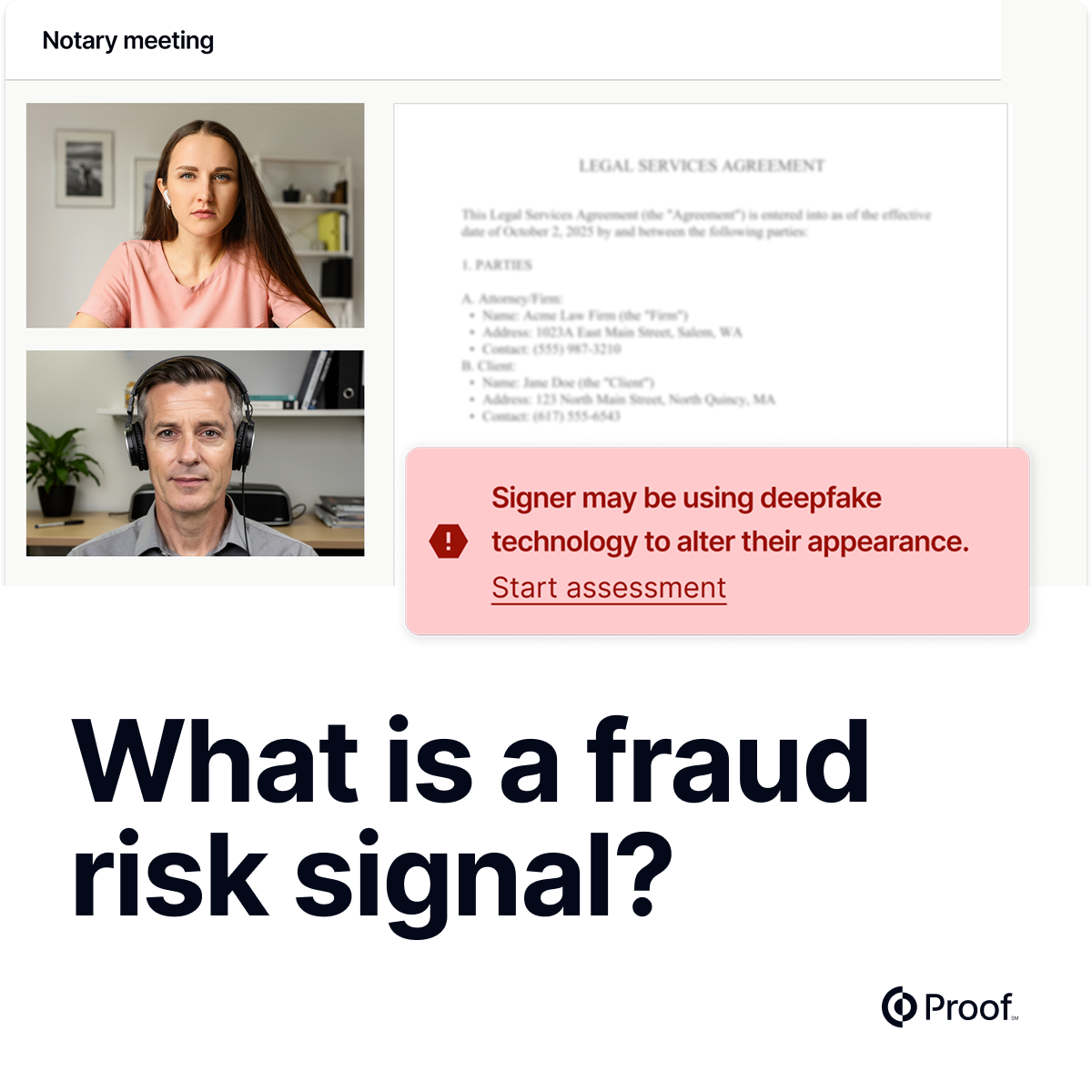
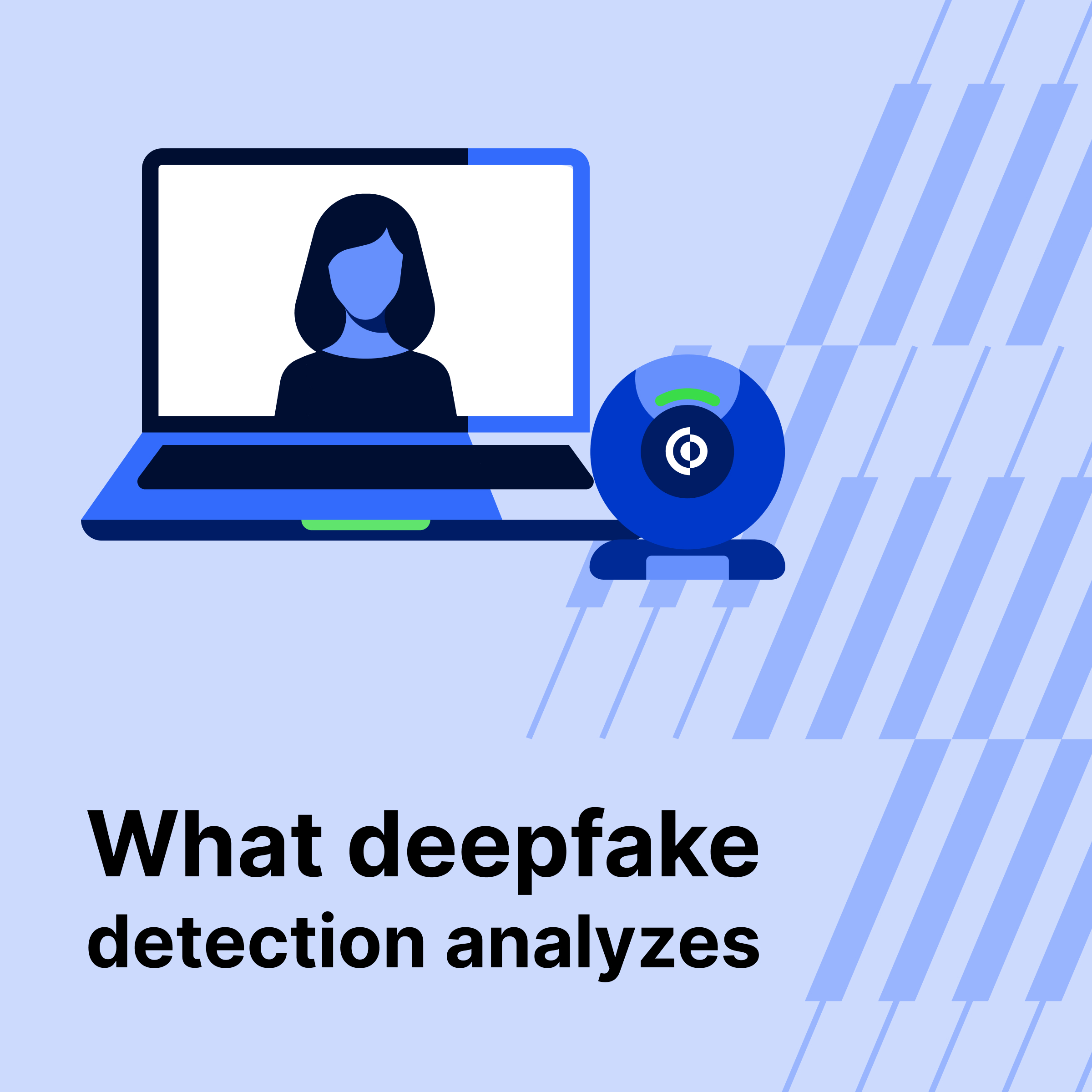
- Liveness detection to confirm the person is physically present and not a deepfake
- A fallback to a live trusted agent for cases that require human review
When identity is verified to this standard, every subsequent step in the transaction is anchored to a proven person.
2. Use secure passwords and multi-factor authentication
According to Avast, 83% of Americans use weak passwords, making credential-based attacks one of the lowest-effort entry points for fraudsters targeting financial workflows. For every platform involved in the closing process, clients should use unique, complex passwords and enable multi-factor authentication (MFA) wherever it is available.
Enterprise platforms should enforce MFA and session controls by default. Relying on clients to self-manage credential security during a high-stakes transaction is a gap that fraudsters actively exploit. A password manager makes this practical at scale.
3. Watch for phishing and social engineering
Phishing in real estate is targeted, not generic. Scammers research the transaction, learn the names of the parties involved, and craft emails that look exactly like legitimate communications from agents, lenders, title companies, and even home inspectors.
Watch for these red flags:
- Urgency and pressure: Messages demanding immediate action are designed to bypass careful review.
- Last-minute wire instruction changes: Any change to payment details arriving via email should be verified by phone using a known, established number before acting.
- Unfamiliar sender addresses: A single-character difference in a domain name can redirect funds to a criminal's account.
- Requests for personal data via email or text: Legitimate parties in a transaction will not ask for Social Security numbers or account numbers through unsecured channels.
Tell clients upfront which channels you will use to communicate, and which you will not. A fraudulent email is most effective when the recipient has no baseline to compare it against.
4. Set security expectations before the transaction begins
Online closings are still unfamiliar territory for many clients. Setting expectations early is the first line of defense against social engineering. When clients know what legitimate communications look like, they are far more likely to flag something that does not belong.
At the start of every transaction, cover:
- Which platforms will be used and how client data is protected on each
- Who will contact the client, through which channels, and what those parties will never ask for via email or text
- How identity will be verified during the closing process and what that process looks like
- What the client should do if something feels off, including a direct contact number to reach you
This conversation takes minutes and can prevent a six-figure loss.
5. Control how personal data is shared
If someone involved in the real estate transaction asks for personal information about your client, such as a Social Security number or bank account number, confirm that person is authorized to receive that information and that you are authorized to provide it. When in doubt, verify directly through an established contact channel, not through the requestor.
Before asking clients to make any payments online or share any sensitive information, verify that the platform or web address is accurate and secure. It will usually either match the URL of the lender or come from an approved financial partner. If the URL is unfamiliar, verify it through an established contact before proceeding.
How to secure documents and create defensible records
Every document in a real estate transaction is a potential target for forgery or tampering. The controls that protect documents are different from the controls that protect wire transfers, but they are equally important.
- Encryption and access controls: Sensitive documents should be stored and transmitted through encrypted channels with access restricted to authorized parties. Avoid sharing closing documents through unsecured email.
- Tamper-evident records: Every signature and every authorization should produce a cryptographically signed record that can be verified after the fact. If a document is altered after signing, a tamper-evident record makes that alteration detectable.
- Audit trails: Every action taken on a document, including who viewed it, who signed it, and when, should be logged in a way that cannot be modified. These records become critical evidence if fraud is discovered after closing.
- Digital signatures backed by identity: A signature is only as trustworthy as the identity verification behind it. Platforms that collect a signature without verifying who is signing produce records that cannot be defended in a dispute.
Review all documents before signing. Look for inconsistencies in names, property descriptions, or recording references. If something appears unclear, request clarification before proceeding.
What to do after closing: ongoing fraud monitoring
Protection should not end at closing. Deed fraud and title fraud can occur after a transaction closes, and the longer it goes undetected, the harder it is to unwind.
Advise clients to take these steps after every closing:
- Enroll in property fraud alert services through their county recorder's office. Many are free and will notify the owner any time a document is recorded against their property.
- Conduct regular checks of county records to catch unauthorized deed filings or liens early.
- Monitor credit reports for accounts or inquiries tied to the property address that they did not initiate.
For title companies and lenders, maintaining tamper-evident closing records means that if fraud is discovered post-closing, you have a defensible, verifiable record of every step in the transaction.
Building security into your closing workflow
The controls exist: biometric identity verification, tamper-evident records, cryptographic audit trails, real-time fraud detection. The question is whether they are embedded in your process or left to chance.
Security in real estate is a platform and process decision. Every new digital touchpoint is a potential entry point for fraud. Closing teams that build verification and fraud detection into the workflow from the start, rather than adding it as an afterthought, are the ones that catch fraud before it costs a client their home or their closing funds.
Proof secures every stage of the closing lifecycle, from biometric identity verification at onboarding through online notarization and eSign. Every signature, every authorization, and every closing produces a defensible, verifiable record.

































.jpg)













































.jpg)