Inside the Fraud Lifecycle | Proof
The article explains that fraud unfolds in four stages—data acquisition, identity manipulation, execution, and monetization—and emphasizes that financial institutions often only detect fraud at the execution phase, missing earlier activities like synthetic identity creation and credential theft, thus advocating for comprehensive, layered defenses throughout the entire fraud lifecycle to better prevent and mitigate damage.
New
Proof launches portable digital identity for banks
Introducing portable identity

Updated August 13, 2026
Fraud is a process with stages, tools, and operational logic. Most organizations encounter fraud without recognizing what stage of that process they are facing. Understanding the full fraud lifecycle changes how you detect it, where you intervene, and how much damage you can prevent.
The fraud that hits a financial institution's onboarding queue today started weeks or months earlier. By the time a bad actor appears in your workflow, they have already acquired credentials, built a synthetic identity, and tested their approach across multiple targets. What looks like a single fraudulent account application is actually the execution phase of a much longer operation.
Organizations that see only the execution stage are always reactive. The ones that understand the full lifecycle build defenses at every phase.
Key takeaways
- The fraud lifecycle follows four distinct stages: data acquisition, identity manipulation, execution, and monetization. Each stage has different tools, tactics, and intervention points.
- Synthetic identity fraud, AI-generated deepfakes, and infostealer malware have made the early stages of the fraud lifecycle more scalable and significantly harder to detect.
- Most organizations concentrate defenses at the execution stage. Fraudsters exploit that gap by doing the hard work upstream, long before they appear in your workflow.
- Layered identity verification, credential leak monitoring, and AI-driven fraud detection are the most effective countermeasures across the full lifecycle.
What is the fraud lifecycle?
The fraud lifecycle is the sequence of stages a bad actor moves through to plan, execute, and profit from fraud. It is a process with infrastructure, not a single event. The four stages are data acquisition, identity manipulation, execution, and monetization.
Each stage depends on the success of the one before it. A fraudster cannot manipulate an identity without first acquiring data. They cannot execute a transaction without a manipulated identity that passes verification. They cannot monetize without completing the transaction. Effective fraud prevention requires controls at every stage, not just the moment the fraud becomes visible.
Stage 1: Data acquisition
Every fraud operation starts with data. Before a bad actor can impersonate a victim, open a synthetic account, or execute a transfer, they need raw material: personally identifiable information (PII), account credentials, or a combination of both:
- Phishing and social engineering. Fraudsters send targeted emails, texts, or calls designed to trick individuals into revealing credentials, account numbers, or personal information. These attacks are increasingly personalized and difficult to distinguish from legitimate communications.
- Infostealer malware. These programs silently harvest credentials, session cookies, and stored passwords from infected devices, often without any visible sign of compromise. The data is then sold in bulk on dark web marketplaces.
- Data breaches. Large-scale breaches from third-party services expose email addresses, passwords, and personal details that fraudsters purchase and weaponize through credential stuffing attacks.
- Dark web data markets. Pre-packaged identity records, including Social Security numbers (SSNs), dates of birth, and financial account details, are available for purchase and used as the foundation for synthetic identity construction.
What you can do at this stage:
- Require multi-factor authentication (MFA) on all customer-facing and employee accounts to limit the damage of stolen credentials.
- Implement credential leak monitoring to detect when employee or customer credentials appear in breach databases.
- Train teams to identify phishing patterns, including spoofed sender domains, urgency triggers, and requests to bypass normal verification steps.
- Set internal policies that define how credential resets and account recovery are handled, reducing the attack surface created by help desk social engineering.
Stage 2: Identity manipulation
With data in hand, the next step is building or repairing an identity that can pass verification checks. This stage is where the most significant evolution in fraud has occurred in recent years.
Synthetic identity fraud involves creating a new identity by combining real and fabricated information: a valid SSN, often belonging to a child or someone without a credit history, paired with a fictitious name, address, and date of birth. These identities are then aged, meaning fraudsters may spend months or years building a thin credit file before executing a high-value fraud event.
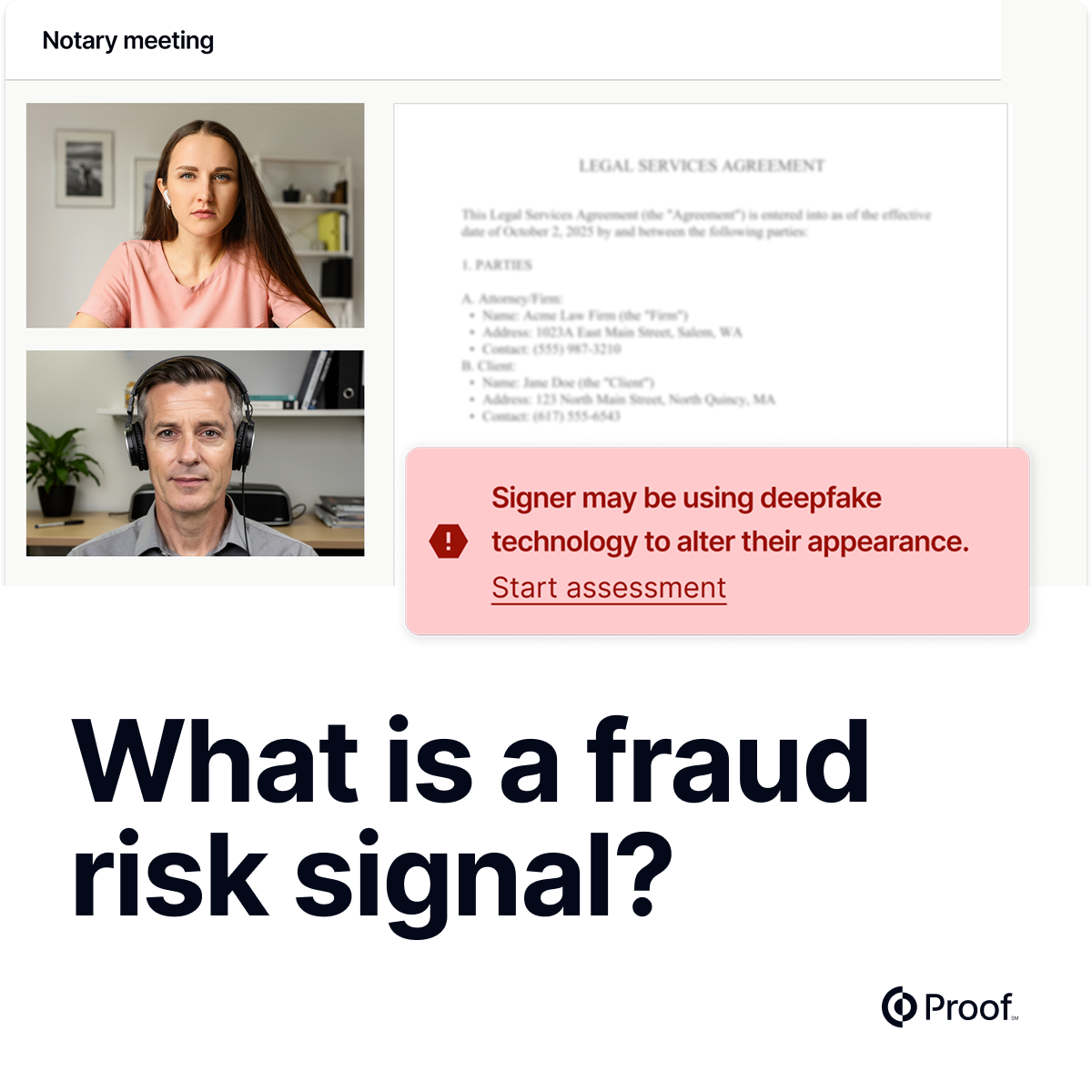
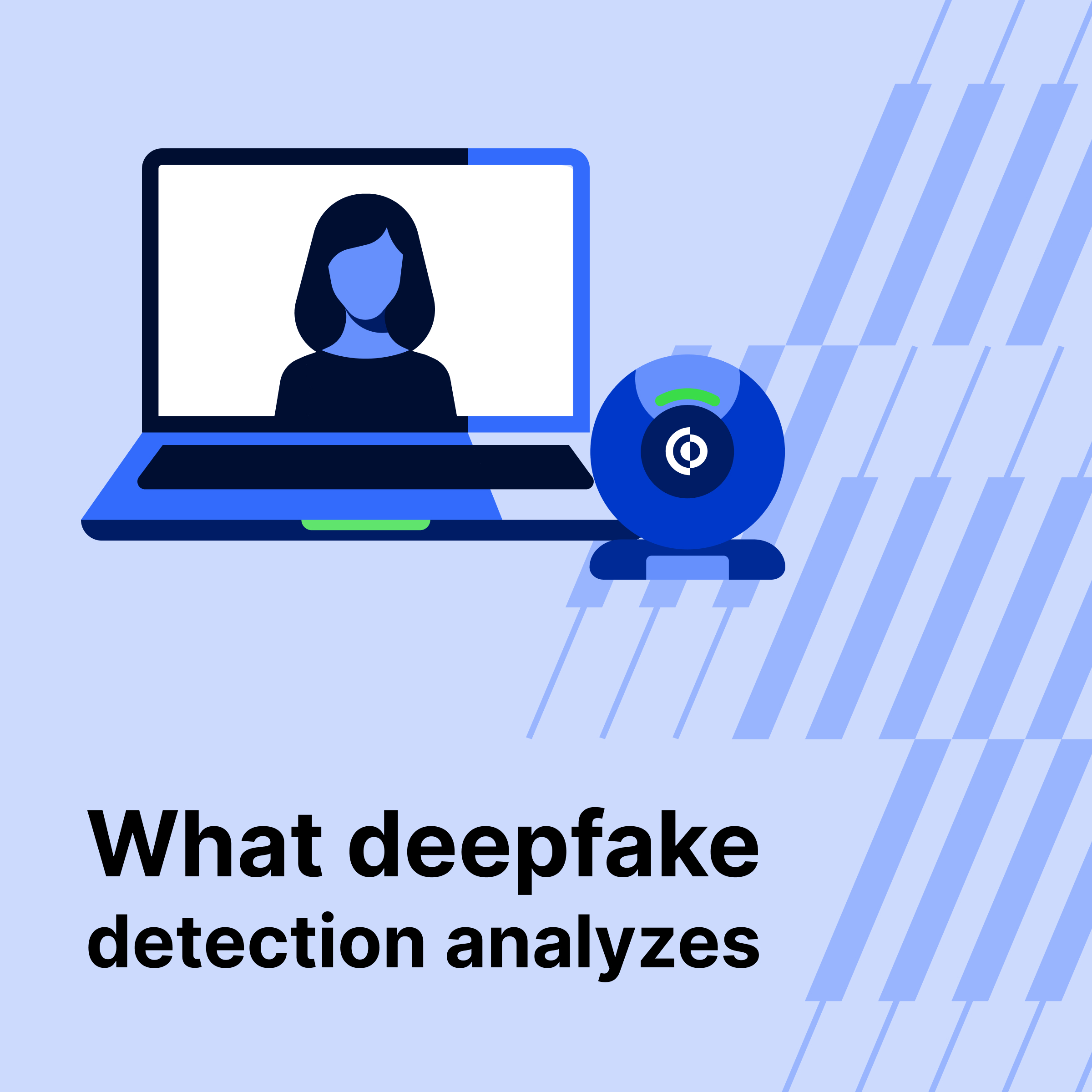
Deepfakes and document manipulation have added another dimension. AI-generated video and audio can now convincingly simulate a real person in a live video call. Fraudsters use these tools to defeat biometric verification checks at onboarding, making identity assurance measures that rely solely on face-matching increasingly inadequate without liveness detection.
The economics of this stage have shifted dramatically. Generative AI has lowered the cost of producing convincing forged documents and synthetic video to near zero. What once required specialized skills now requires a subscription.
- Synthetic identity construction. Combining a real SSN with fabricated personal details to create a creditworthy identity that does not correspond to a real person.
- Document falsification. Altering or generating forged government-issued IDs, pay stubs, and utility bills to support fraudulent account applications.
- AI-generated deepfakes. Using generative AI to produce realistic video or images of real individuals, deployed to defeat biometric and liveness verification.
- Account takeover preparation. Accumulating enough personal information about a real account holder to successfully pass knowledge-based authentication (KBA) questions.
What you can do at this stage:
- Use biometric verification with liveness detection at onboarding to distinguish real individuals from AI-generated or replayed biometrics.
- Add knowledge-based authentication using dynamic questions, not static ones, that are harder to answer using purchased data.
- Verify document authenticity against known issuer patterns and look for signs of digital manipulation in submitted IDs.
- Monitor for patterns consistent with synthetic identity aging: thin credit files paired with unusual application behavior or identity attributes that do not cross-reference consistently.
Stage 3: Execution
This is where fraud becomes visible, and where most organizations believe the attack begins. Execution is only possible because stages one and two succeeded. The fraudster is now agile, adaptive, and technically prepared, and they have chosen their moment carefully.
High-risk events in the financial workflow are the primary targets: account onboarding, profile updates, high-value payment authorizations, wire transfer requests, and new credit applications. Fraudsters time their activity to exploit gaps in verification, high transaction volumes, or moments when manual review is least likely.
A 2026 Bottomline survey found that 44% of financial institution respondents identified mid-transaction fraud detection as their organization's biggest payments security gap. That number reflects a structural problem: most controls are concentrated at the front door, while the moment of actual fund movement remains underprotected.
- New account fraud. Opening accounts using synthetic or stolen identities to access credit lines, deposit accounts, or financial products.
- Account takeover. Using acquired credentials or manipulated identity checks to gain control of a legitimate customer's account and redirect funds or change contact information.
- Unauthorized transaction authorization. Exploiting weak authentication at high-value transaction touchpoints to initiate transfers, withdrawals, or credit draws.
- Business email compromise (BEC). Impersonating executives, vendors, or clients to authorize fraudulent payments or redirect payment instructions.
What you can do at this stage:
- Apply stepped-up identity verification at high-risk events: new account creation, password resets, contact information changes, and high-value transaction approvals.
- Use device intelligence and behavioral analytics to detect anomalies in how users interact with your platform, flagging sessions that do not match established patterns.
- Require out-of-band confirmation for wire transfers or large-value payment instructions, so a single compromised channel is not sufficient to execute a transfer.
- Implement real-time fraud signal monitoring that evaluates the risk of each session and transaction independently, with automated escalation for high-risk events.
Stage 4: Monetization
Completing the fraud is not the same as profiting from it. Monetization is the final stage, where stolen assets are converted into usable funds and the trail is obscured. This is where organized fraud networks are most sophisticated.
- Bank logs. Stolen credentials used to access accounts and initiate fund transfers before the account holder detects unauthorized activity.
- Money mules. Recruited individuals who receive and forward stolen funds, creating layers of transactions that obscure the origin of the fraud proceeds.
- Cryptocurrency conversion. Converting stolen funds into digital assets to complicate tracing and recovery.
- Refund and reversal fraud. Exploiting chargeback and dispute processes to extract funds after the fraudulent transaction has already been processed.
What you can do at this stage:
- Monitor accounts for transfer patterns inconsistent with established account behavior, particularly rapid or sequential withdrawals following recent authentication events.
- Flag accounts that have recently undergone profile changes, including email, phone, or address updates, before allowing high-value transfers.
- Train fraud operations teams to recognize mule account patterns in transaction networks.
- Maintain detailed, tamper-evident audit trails for all authentication and authorization events so that forensic investigation is possible when fraud is detected.
How AI has changed the fraud lifecycle
Generative AI has not created new stages in the fraud lifecycle. It has made each existing stage faster, cheaper, and harder to detect.
At the data acquisition stage, AI-powered phishing tools now generate personalized messages at scale, with grammar and context that make them indistinguishable from legitimate communications. At the identity manipulation stage, AI-generated deepfakes can pass real-time biometric checks without liveness detection. At the execution stage, AI enables fraudsters to automate credential stuffing and account testing across thousands of targets simultaneously.
The fraud that took a skilled operator days to execute now takes minutes. Organizations that have not updated their controls to account for AI-enabled fraud are operating with a significant and widening gap.
Three specific AI-driven threats deserve direct attention:
- Deepfake video. Real-time deepfake generation can now defeat face-matching verification that lacks active liveness detection. A fraudster can simulate a known individual in a live video call with commercially available tools.
- Synthetic identity at scale. AI can generate thousands of plausible synthetic identity profiles, each with consistent supporting documentation, in the time it previously took to build one.
- Automated social engineering. Large language models can conduct convincing phone and chat-based social engineering at scale, targeting help desks and account recovery workflows without human involvement.
The countermeasure is not more of the same. It is verification that combines biometric liveness detection, document authentication against issuer patterns, and behavioral signals that AI cannot easily replicate.
Why most fraud defenses fail
The fraud lifecycle succeeds when organizations inspect each stage in isolation. A failed biometric check at stage two means nothing if stage one data acquisition already succeeded and the fraudster simply acquired a better document. Effective fraud prevention requires layered controls that operate across the full lifecycle.
Three structural failures explain why most defenses fall short:
- Siloed controls. Onboarding verification, transaction monitoring, and account recovery are managed by different teams with different tools. Signals that would indicate fraud when viewed together are invisible when viewed separately.
- Point-in-time verification. Identity is verified once at onboarding and then trusted indefinitely. Fraudsters exploit this by passing initial checks with a synthetic identity and then operating freely once inside the account.
- Reactive posture. Most fraud detection is triggered by a completed transaction, not by upstream signals. By the time the alert fires, the money has moved.
The organizations that stop more fraud are the ones that treat it as a process and build defenses that match the attacker's operational logic.
How Proof stops fraud at every stage
Proof's platform addresses the fraud lifecycle directly, with controls that map to each stage rather than concentrating everything at a single checkpoint.
Proof Identify provides real-time identity verification using biometric comparison, liveness detection, and government ID authentication, blocking manipulated or synthetic identities at the onboarding stage. Proof Verify enables continuous verification for high-risk transaction events, so authorization gaps cannot be exploited later in the session. Proof Defend layers AI-driven fraud intelligence across the full workflow, with cross-channel monitoring, deepfake detection, and explainable risk scoring so your teams can act on specific signals rather than blanket friction.
Visa Ventures has made a strategic investment in Proof, and Proof is the only platform that can verify identity to NIST IAL2 and cryptographically bind it to agent activity. That combination of identity assurance and fraud intelligence is what makes lifecycle-spanning defense possible.
Fraud is a process. The organizations that stop it are the ones that treat it like one.
See how Proof Defend protects every stage of the transaction lifecycle.





























.jpg)












































.jpg)