Inside the Interview: Building a Trust Framework for Remote Onboarding
The article discusses how Proof's portable digital identity solution addresses the mid-funnel identity gap in remote hiring by implementing a three-layer trust framework—verified baseline identity, risk-triggered step-up verification, and reusable portable credentials—to prevent impostors using fake documents or deepfakes from slipping through remote onboarding processes.
New
Proof launches portable digital identity for banks
Introducing portable identity

Updated July 17, 2026
By the time someone reaches the interview stage, your organization has already learned a lot about them on paper. The question that still matters most is the one technology alone can’t answer: is this person real?
In today’s remote-first environment, that’s where risk shifts. The early filters may confirm skills and experience, but mid-funnel is where impostors try to slip through. It’s the moment when a legitimate process meets an unverified human — and where Proof keeps trust intact.
Key Takeaways
- Remote onboarding creates a mid-funnel identity gap: traditional workflows depend on forms and human judgment rather than verified, live identity confirmation.
- A remote onboarding trust framework has three layers: a verified baseline at first contact, step-up verification triggered by risk signals, and a portable credential that carries trust forward.
- Impostors in remote hiring use realistic documents, deepfake video, and proxy stand-ins. Interviewers cannot reliably detect these threats without technology-backed verification.
- Step-up verification should be triggered selectively, based on role sensitivity, access level, anomalous device or location signals, and compliance policy requirements.
- A verified identity credential issued at onboarding can be reused across downstream systems, eliminating redundant checks and creating one continuous chain of trust.
- Only 31% of chief human resources officers (CHROs) report confidence in their organization's ability to stop hiring fraud, which points to a gap between awareness and infrastructure.
Where Mid-Stage Risk Emerges
Once interviews begin, the attack surface changes. Impostors lean on realistic documents, well-crafted profiles, and even real people acting as stand-ins. They may route interviews through controlled environments, use manipulated images or video, and submit reused or forged IDs.
Traditional workflows depend on people and forms rather than proof of a live, matching identity. That gap is what allows bad actors to progress deeper into onboarding.
Start from a Verified Baseline
Organizations that begin with Identify already have an edge. Identify confirms that a real person completed the first step and that the claimed identity passed document and fraud checks. In many cases, that is enough to proceed. The goal at this stage is to preserve that trust without adding unnecessary friction.
When the risk profile changes, the process needs to adapt. High-privilege roles, sensitive data access, mismatched signals, or anomalies in device and network context are examples of moments when an extra step is warranted. That is where Verify comes in.
Step-Up Control With Human-In-The-Loop Verification
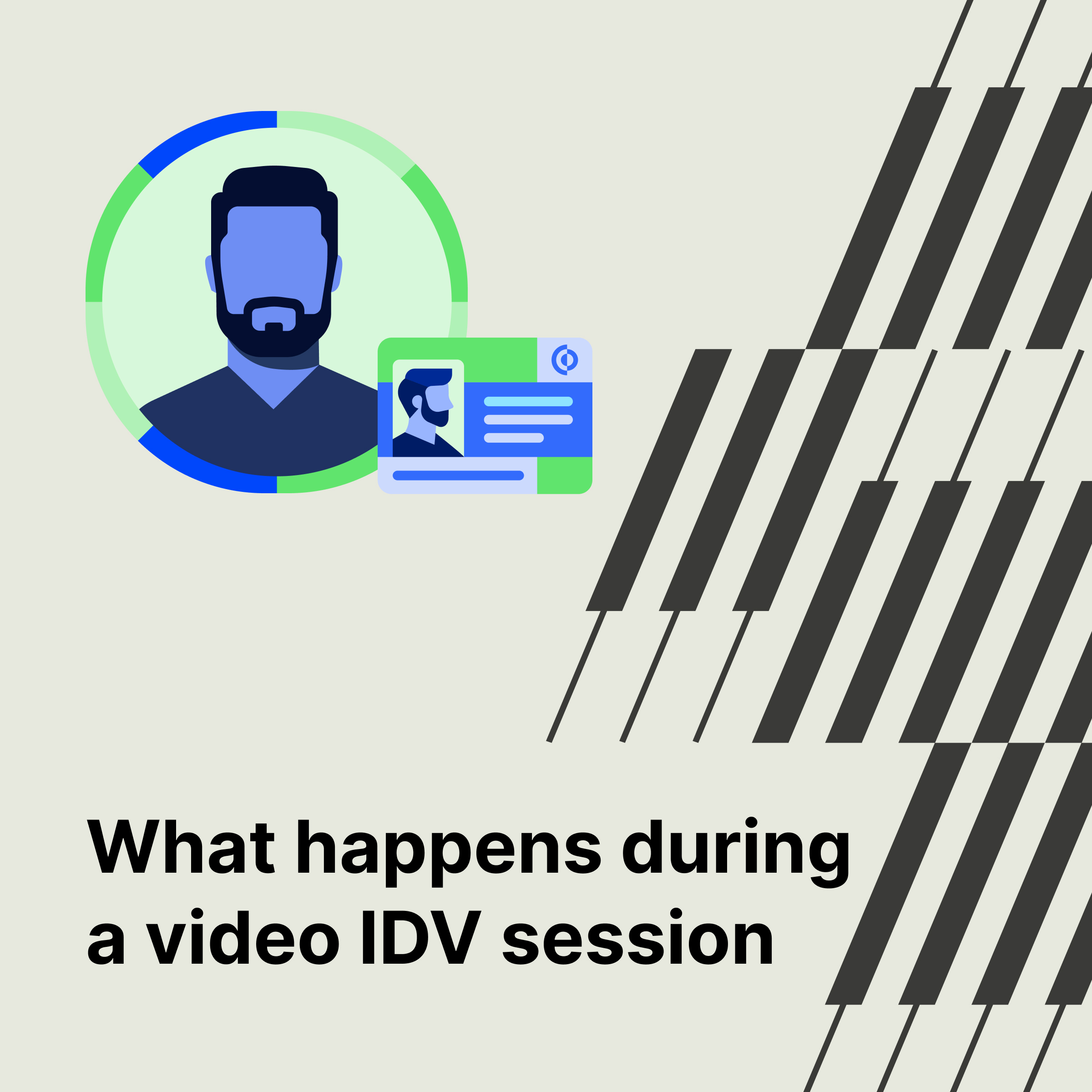
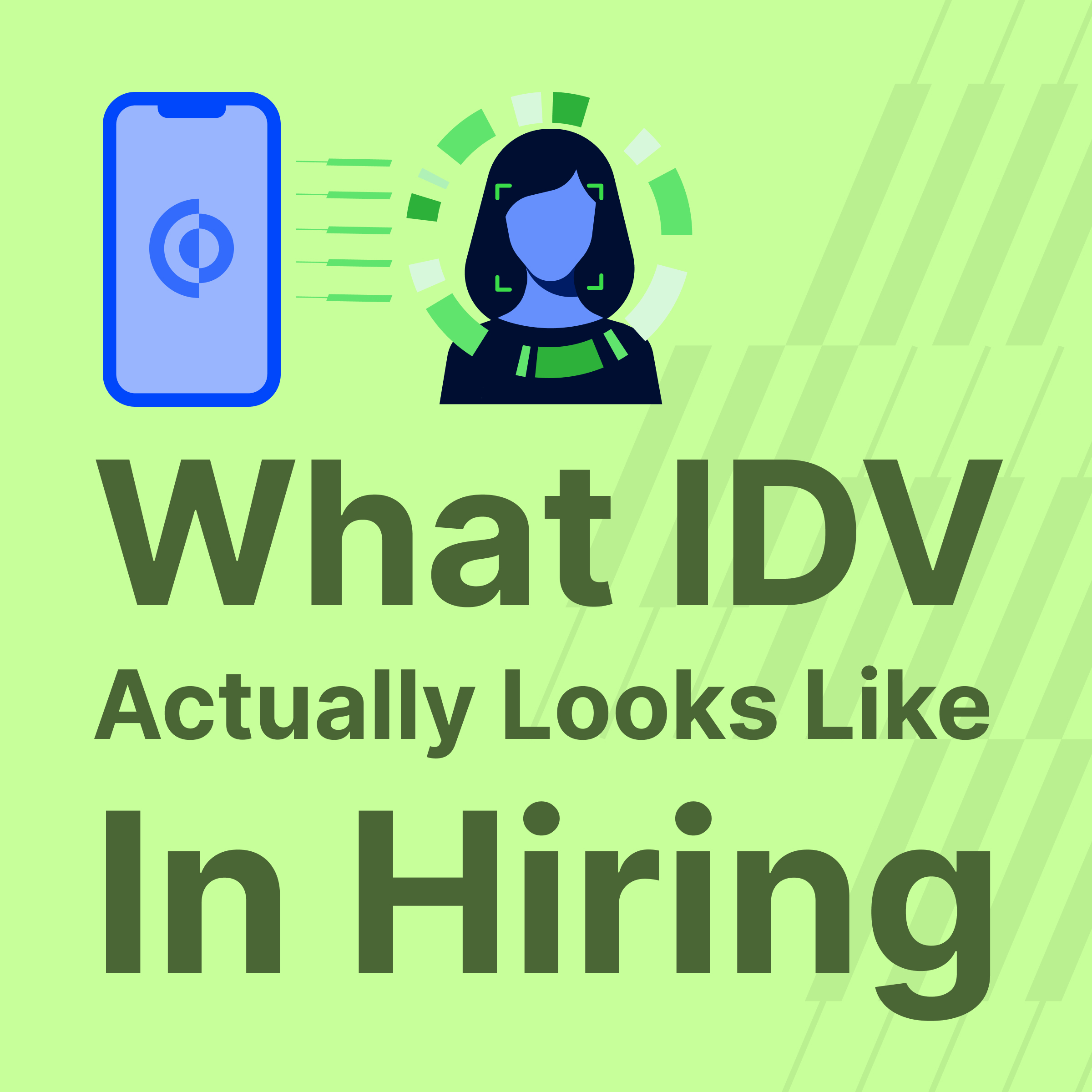
Verify builds on the baseline created by Identify and adds real-time identity confirmation when needed. Verify checks the integrity of government IDs, confirms document authenticity, and matches the document to a live human through a short, guided video session. Ultimately, it confirms that the person presenting the credential is the same person tied to the identity record you already trust.
Teams can define triggers for Verify. Examples include sensitive roles, unusual access requests, anomalies in identity signals, or policies that require higher assurance. Used this way, Verify becomes a precise control that strengthens security without slowing legitimate candidates.
Keep Trust Moving
Once identity has been verified, Certify turns that verification into a portable credential. If Identify issued a credential earlier in the process, Verify reinforces it and confirms continuity. If a credential does not yet exist, Certify creates one. That credential allows the same verified person to be recognized across systems and future steps without repeating the full verification flow.
The verified identity that entered at the first touchpoint becomes the anchor for interviews, document completion, signature events, and later access provisioning. It creates one unbroken chain of trust rather than a series of disconnected checks.
A Practical Model for Risk-Based Onboarding
A consistent policy framework keeps mid-funnel verification precise.
Baseline with Identify: Confirm identity at the first touchpoint and prepare to issue a Certify credential.
Define step-up triggers: Align with risk, compliance, and access policies. Examples include privileged roles, sensitive data, or anomalies in location and device signals.
Escalate with Verify only when needed: Run the live identity check to confirm presence and authenticity.
Anchor outcomes in Certify: Issue a credential and carry it forward into downstream systems.
Audit and refine: Review performance and adjust triggers so assurance and experience stay in balance.
Onboarding is not a single moment. It begins at first contact and continues through access, recovery, and high-risk actions. When Identify sets the baseline, Verify steps in selectively, and Certify carries the proof forward, the result is a continuous chain of trust that lasts beyond day one.
See how Proof builds trust into every stage of onboarding >
Disclaimer: Proof’s products are designed solely for identity verification and fraud prevention. They are not to be used to evaluate a candidate’s qualifications, character, or suitability for employment.






























.jpg)













































.jpg)