Introducing the Cryptographic Answer to AI Fraud
Proof, a leading digital identity and transaction security platform serving major financial institutions, has launched Certify, a cryptographic digital identity solution designed to combat AI-driven fraud such as deepfakes and falsified documents by enabling instantly authorized digital signing of any content with verified legal identity, representing a transformative leap akin to the EMV chip's impact on payment security.
New
Proof launches portable digital identity for banks
Introducing portable identity

Proof, the leading digital identity and transaction security platform, working with more than 16 of the Fortune 100 and processing more than $200 billion annually, today announced a new solution that solves the problem of falsified content, deepfakes, and digital impersonation that artificial intelligence has dramatically exacerbated.
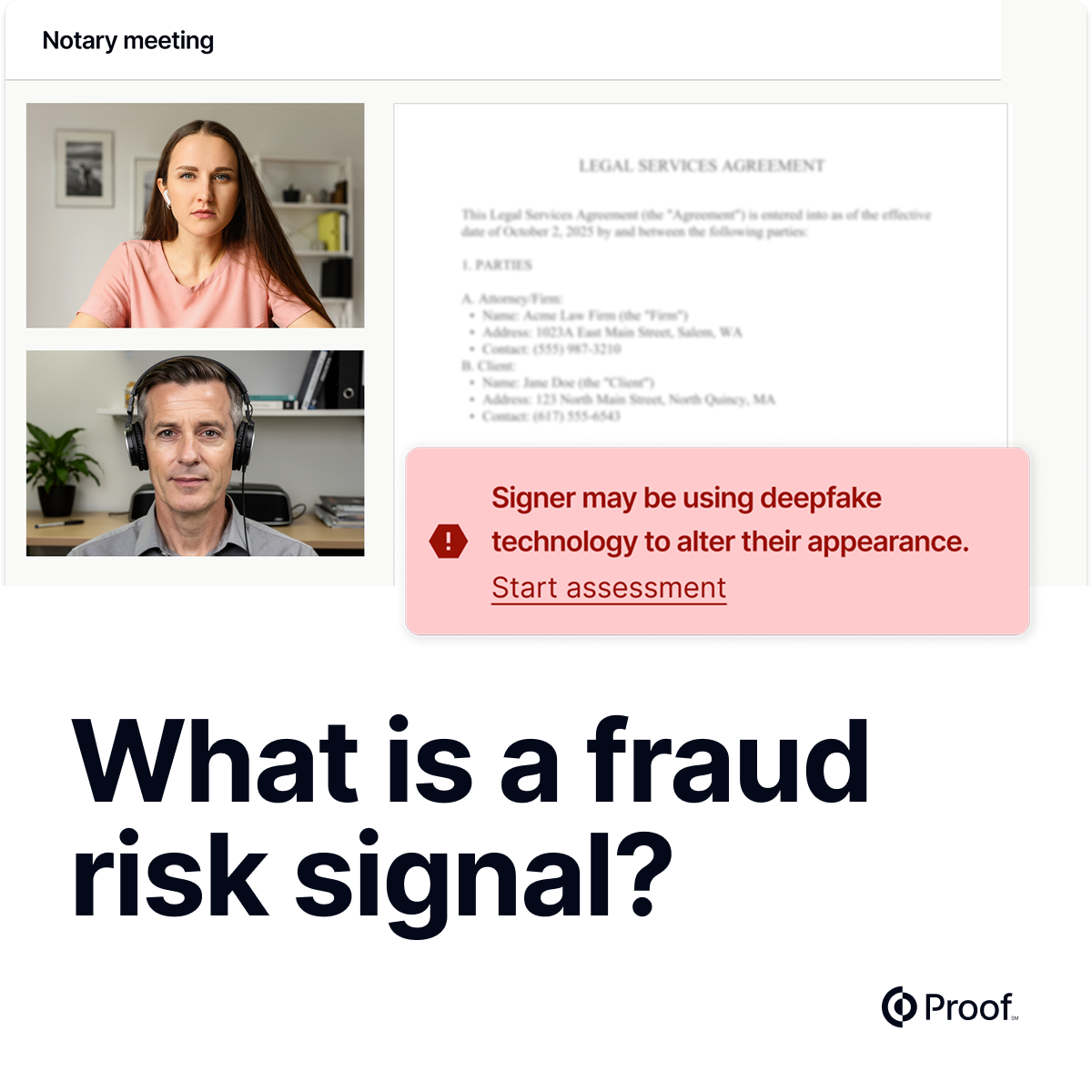
Generative AI is enabling the proliferation of fake documents, images, videos, and data at an unprecedented scale, to the point where it’s indistinguishable from reality. While fake media and misinformation have garnered the most attention, the real danger in AI lies in its ability to forge signatures, falsify records, impersonate one's voice on the phone or fake a person’s likeness on video.
OpenAI CEO Sam Altman warns that we face an "impending crisis" because "AI has fully defeated many ways financial institutions currently confirm identity" and "society is going to have to change the way it verifies identity."
Proof’s Certify is a revolutionary new product that enables instantly authorized digital signing of any type of content using a verified legal identity. This represents a technological leap from basic e-signatures akin to the EMV chip's transformation of the payment industry, as counterfeit card fraud was eliminated with cryptographically authenticated transactions. Certify introduces a similar paradigm for digital identity.
By cryptographically signing all media and data, Certify generates irrefutable digital evidence that cannot be counterfeited by generative AI.
Proof has reached more than $600 billion in secured digital transactions across mortgage closings, retirement fund withdrawals, insurance claims, and estate planning. With Certify, your identity is embedded in everything you do online, creating verifiable records that anyone can instantly trust:
- Tax returns submitted with certainty in the filer's identity
- Images and videos with cryptographic proof of the creator
- Records and documents that organizations can verify are genuine
- Wire instructions so that treasury departments can trust the information submitted
- Legal agreements that cannot be forged or disputed as fake
"In an era where AI can generate perfect deepfakes and falsify any document, cryptographic proof of identity and authenticity of records is existential," said Pat Kinsel, CEO of Proof. "It’s becoming a lot harder to answer ‘was this really you?’ Everything we believe and accept as real needs to rely on verifiable records."
“Proof is addressing the threat of AI-generated fraud head-on with a solution that is entirely unique and in high demand, particularly in financial services,” said Travis Jarae, founder and CEO, Liminal. “Our data shows that 83% of buyers in financial services indicated they need a platform solution that covers identity and fraud use cases together.”
Extending far beyond e-signatures, with Certify verifiable records will supplant any digital asset that is accepted by existing legal frameworks—documents, images, video, audio, and structured data. This makes it possible to authenticate all forms of media, ensuring provenance and accountability in an era where digital forgeries are proliferating. Organizations can immediately verify the authenticity of any evidence they receive, without requiring users to present their identification every time.
Aaron Davis, CEO of Florida Agency Network, the largest independent title company in Florida, said, “Certify will help us meet the moment on the fraud threat that has overtaken our industry. We’ll now be able eliminate the risk of AI-powered identity fraud for the more than $2.5 billion in real estate transactions that we manage annually.”
Proof is also announcing the availability of the Identity Authorization Network, where consumers can now save their verified biometric identity once and instantly true-sign any media and data across the Proof platform. This digital identity eliminates the need for repeated onboarding and establishes a chain of trust with every authorization, as there’s an inextricable link between an identity and the record it produces.
"AI has created an authenticity crisis that demands a new approach to digital trust," Kinsel added. "Most identity solutions are focused on presentation of your ID, but in order to truly become the identity layer for the internet, we need to ensure that all data that is transmitted and trusted can be watermarked with your identity.”
Those interested in learning more about Certify and Proof’s Identity Authorization Network can visit Proof.com/certify for more information.
Proof | Certify Sizzle Reel
Press O for more options

Click for sound
0:19






























.jpg)





















































.jpg)